The Legacy of Thomas Edison and His Battery
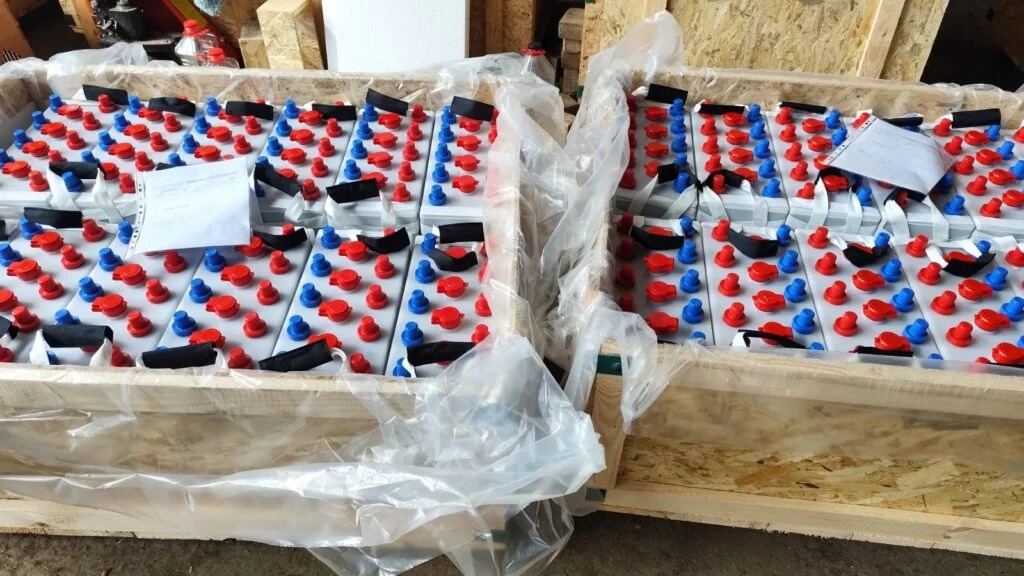
In the early 20th century, the world was undergoing an electrical revolution, and the race was on to store energy efficiently. While lead-acid batteries existed, they were heavy, fragile, and short-lived, making them unsuitable for the electric vehicles and industrial applications of the time. The greatest inventor of the age, Thomas Edison, recognized this flaw and set out to create a “perfect” battery that would be lighter, stronger, and more durable than anything else on the market.
After thousands of experiments and years of tireless research, he introduced the Nickel-Iron Battery to the world. Edison famously declared it to be one of his most difficult yet satisfying inventions, designed specifically to outperform lead-acid competitors in every metric of durability. Today, we still benefit from his genius, as the fundamental chemistry he perfected remains the gold standard for long-life energy storage.
The Invention of the Edison Battery
Edison’s goal was to produce a battery that used an alkaline electrolyte, which he believed would be less corrosive and destructive than acid. He experimented with various metals before settling on the combination of nickel and iron, materials that were robust and abundant. His persistence resulted in a battery that was not just a storage device, but a feat of chemical engineering that could withstand abuse that would destroy any other cell.
The Electric Car and the Edison Battery
Interestingly, Edison originally designed these batteries to power the early electric cars that were popular in the 1900s. He envisioned a future where clean electric transport was the norm, powered by his resilient batteries. While the internal combustion engine eventually took over, many of those original electric cars are still found in museums today with their original alkaline batteries still capable of holding a charge, a testament to their immortality.
Industrial Adoption of the Nickel-Iron Battery
While the car market shifted, the industrial world quickly embraced Edison’s invention for its unkillable nature. Mining companies, railways, and marine fleets adopted the technology because it could survive the rough conditions of the real world. For decades, these batteries served in the most demanding roles imaginable, proving Edison’s claim that he had created the most robust battery ever made.
Why the Nickel-Iron Battery Persists
In a world obsessed with the “new and improved,” it is rare for a century-old technology to remain superior to modern alternatives. However, physics and chemistry do not age, and the properties that made nickel-iron superior in 1910 are the same properties that make it superior today. We have improved the manufacturing techniques and materials, but the core soul of the battery remains exactly as Edison designed it.
Modern Improvements to the Edison Battery
Today’s manufacturing allows for purer materials and more precise construction than was possible in Edison’s laboratory. We use laser welding, high-purity nickel, and advanced polymer separators to enhance the performance while retaining the legendary longevity. These subtle updates have increased the efficiency and capacity of the Edison Battery, making it even more relevant for the modern solar age.
The Contrast with Planned Obsolescence
Edison lived in an era where things were built to last, a sharp contrast to today’s disposable culture. Modern lithium batteries are marvels of density, but they are designed with a finite lifespan, destined for the landfill. Using an alkaline battery is a connection to a time when engineering was about creating legacy and value, not just recurring revenue for manufacturers.
Historical Facts about the Nickel-Iron Battery
A look at the timeline and achievements of this historic technology.
- Inventor: Thomas Alva Edison, the wizard of Menlo Park.
- Year: Patented and commercialized in the early 1900s.
- Purpose: Originally intended for electric vehicles and traction.
- Survivors: Original cells from 1910 are still functional today.
- Chemistry: Alkaline electrolyte proved superior to acid.
- Resilience: Survived the vibration of early unpaved roads.
- Legacy: Remains the longest-lasting battery chemistry known.
- Philosophy: Built to be an investment, not a consumable.
- Modern Use: Now protecting homes and businesses worldwide.
Conclusion on the Edison Legacy
Owning this technology is like owning a piece of history that works for you every day. It is a reminder that sometimes the old ways were indeed better, especially when it comes to durability and sustainability. Thomas Edison gave the world the lightbulb, but for the off-grid homeowner, his battery might be his most valuable gift.
By choosing the Nickel-Iron Battery, you are honoring a legacy of excellence and rejecting the cycle of waste. You are entrusting your home’s energy to a device that has proven itself for over a hundred years. It is the only battery that carries the name of a genius and the durability of a tank.