From Startup to Scale-Up: Facility Decisions That Define Business Trajectory
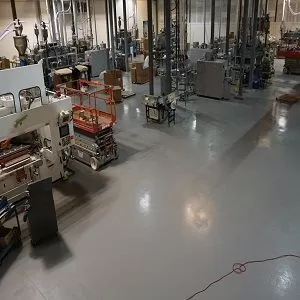
The journey from startup to scale-up is filled with pivotal decisions. Hire the right leadership team. Choose the right technology platform. Build the right customer acquisition strategy. Less discussed but equally consequential are the facility decisions that shape whether a growing operation can actually support its own ambitions. Industrial epoxy flooring sits in that category. It is a decision that seems mundane on the surface but reveals its strategic importance the moment the business starts pushing harder on its physical infrastructure. Getting it right early creates operational headroom. Getting it wrong creates friction that compounds as the business grows.
The Compounding Cost of Wrong Facility Decisions
Poor facility decisions tend to compound in ways that are difficult to predict in advance but obvious in hindsight. A flooring system that works fine at low volumes becomes a maintenance burden at scale. Dust from deteriorating concrete that was manageable with three employees becomes a contamination risk with thirty. A surface that handled a few forklifts develops serious structural issues when the fleet triples. Each of these problems requires a reactive fix that costs more, causes more disruption, and delivers less than a proactive investment would have. Business founders who understand compounding in a financial context should apply the same thinking to facility decisions.
What Investors and Acquirers Look for in Facility Quality
As businesses grow toward acquisition or investment rounds, facility condition becomes part of the due diligence conversation. Investors conducting operational assessments pay attention to deferred maintenance and facility quality as indicators of management discipline. A well-maintained facility with proper flooring, clear safety systems, and organized layout suggests an operation run by people who pay attention to details. The inverse, a facility with cracked floors, improvised safety markings, and visible deferred maintenance, raises questions about management priorities that go beyond the facility itself. Facility quality is a proxy for operational quality in the minds of sophisticated evaluators.
Technology, Automation, and the Floor Beneath It All
Businesses that are integrating automation into their operations have a particularly strong case for investing in industrial epoxy flooring. Robotic systems, automated guided vehicles, and precision equipment all perform better on stable, smooth surfaces. Floor irregularities that a human worker navigates instinctively create genuine problems for automated systems that cannot adapt. Companies planning to introduce automation should prioritize floor upgrades before or alongside that technology investment to ensure the physical environment supports the digital capability being deployed.
Building an Operations Playbook That Includes Facility Standards
Scaling businesses benefit enormously from documented operational standards that capture best practices and create consistency across growth. The physical facility should be part of that playbook. Defining floor maintenance protocols, inspection schedules, and upgrade criteria ensures that facility quality does not drift as the organization grows and management attention spreads across more priorities. Industrial epoxy flooring systems that are properly documented and maintained hold up better and longer, delivering more of the value they were designed to provide.
Conclusion
The businesses that scale successfully are the ones that sweat the details at every level. Industrial epoxy flooring is a detail that carries outsized importance in operational environments. It reduces risk, supports automation, impresses evaluators, and creates a physical foundation for growth. Make the decision deliberately, early, and with the right expertise behind it.
Related Post

Whenetflix for Making It Easy to Track What’s on Netflix Every Week?
Streaming is a world that changes rapidly, and in this world, it is not easy [...]

AKC French Bulldog Puppies for Sale – Quality Breeding with Health Guarantee
If you are in search of top-quality AKC French Bulldog puppies for sale, look no [...]
The Operational Impact of Professional Epoxy Flooring Contractors
The efficiency of a commercial or industrial facility is often dictated by the quality of [...]